VIRTUAL SUMMIT
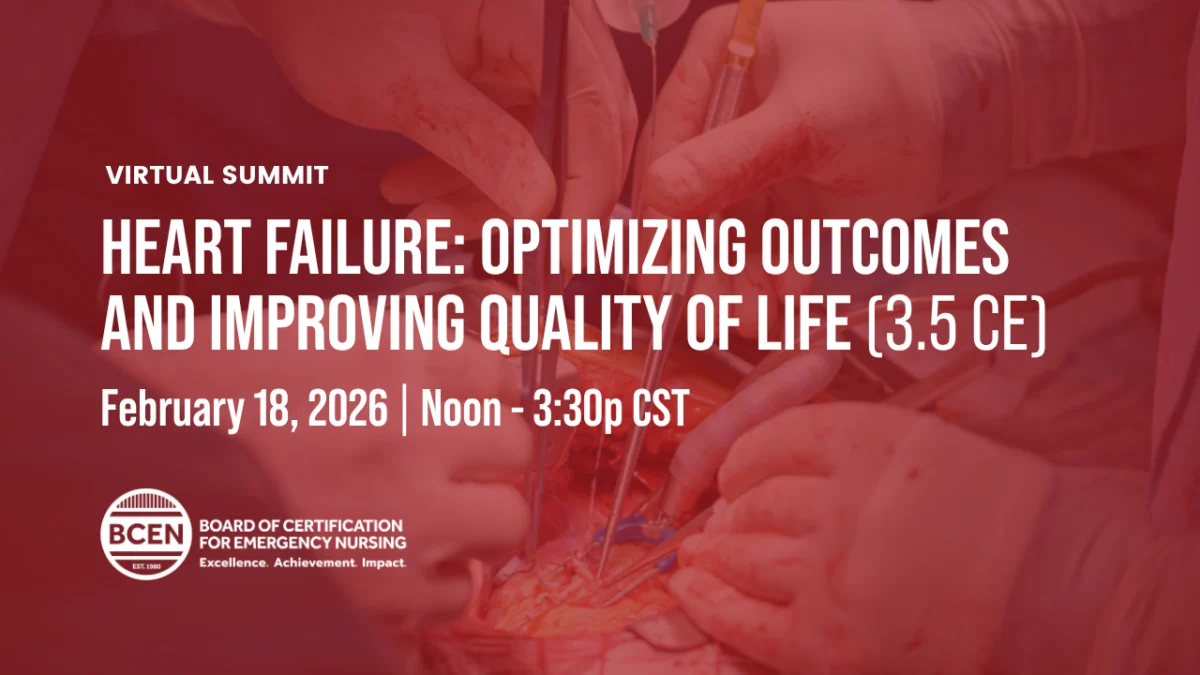
Heart Failure: Optimizing Outcomes and Improving Quality of Life (3.5 CE)
Expert-led education to elevate clinical practice and enhance patient outcomes across the care continuum. 🫀
This heart failure virtual summit is a comprehensive learning experience designed for nurses and healthcare professionals across emergency, critical care, pediatric, and cardiac specialties. Explore the full spectrum of heart failure—from core foundations and congenital heart defects to hemodynamics, temporary mechanical circulatory support, and life with an LVAD. Through evidence-based insights, real-world clinical strategies, and a powerful patient perspective, participants will gain practical tools to elevate cardiac care and improve patient outcomes.
Summit Agenda
📅 Wednesday, February 18, 2026 | Now available on-demand!
Expert clinicians, RNs, and healthcare professionals across emergency, critical care, pediatric, and cardiac specialties explore the full spectrum of heart failure.
 |
Heart Failure: A Common and Complex ConditionMichael Dexter, MSN, RN, CEN, CFRN, CPEN, CTRN, TCRN, CCRN, CNL Review key foundations of heart failure, including incidence, classification, and common presenting symptoms. Compare heart failure and cardiogenic shock, differentiating similar patient presentations. |
 |
Heart Failure in Children: The 5 Most Common Congenital Heart DefectsDerek Collins, BSN, RN, C-NPT, CFRN, CEN, CTRN, TCRN, FP-C This session provides an in-depth look at the five most common congenital heart defects and their treatment approaches. Participants will learn to recognize key clinical features, differentiate between acyanotic and cyanotic lesions, and understand the principles of initial stabilization, medical management, and indications for surgical intervention. Designed for healthcare professionals, this session offers practical insights to enhance the care of patients with congenital heart disease. |
 |
Holding the Line: Hemodynamic Management and Temporary Cardiac Support in Heart FailureBruce Hoffman, Ed.D.(s), FNPc, MSN-RN, CFRN, FP-C, CCP-C, C-NPT This session explores the dynamic relationship between hemodynamics, clinical assessment, and advanced support strategies in the management of heart failure. Participants will review key hemodynamic parameters that guide bedside evaluation, learn to interpret invasive monitoring data and trends in the context of cardiac function, and examine how these findings inform targeted nursing interventions. The session will also introduce temporary mechanical circulatory support (tMCS) devices—including the intra-aortic balloon pump (IABP), Impella, and ECMO – as bridge therapies that stabilize patients in acute decompensation. Through an integrated understanding of physiology, monitoring, and intervention, nurses will enhance their ability to deliver evidence-based, patient-centered cardiac care. |
 |
Living with Mechanical Circulatory Support: The Care of Patients with VADsLinda Staley, MSN, FNP, RN This session explores the journey of living with a Left Ventricular Assist Device (LVAD) through the eyes of a patient. It will provide an overview of what an LVAD is, who may be a candidate, and the motivations behind choosing this life-sustaining therapy. Participants will gain valuable insight into the patient experience and quality of life after LVAD implantation—truly a look at going “to infinity and beyond” with advanced cardiac support. |
Learning Objectives
- Differentiate the classifications, clinical features, and treatment approaches of heart failure across its various stages, including its relationship to cardiogenic shock.
- Identify and differentiate the key features, clinical presentations, and management principles of the five most common congenital heart defects, including distinctions between acyanotic and cyanotic lesions and indications for surgical intervention.
- Apply hemodynamic principles and monitoring data to guide nursing assessment, clinical decision-making, and management of patients with heart failure, including those supported by temporary mechanical circulatory devices such as the Impella, IABP, and ECMO.
- Describe the purpose and function of LVAD therapy, identify appropriate patient candidates, and discuss the motivations and quality-of-life considerations from the patient’s perspective.
CE = 3.5
Provider approved by the California Board of Registered Nursing, Provider # CEP17490 for 3.5 contact hour
This session is – Clinical / Accredited