Evolving Excellence: Updating the CTRN Exam
Plus, What’s New in Ground Transport Nursing
In this edition of Evolving Excellence: Highlights of the latest CTRN certification exam update, plus perspectives from two transport nurse experts on how the critical care ground transport specialty is evolving—and why nurses with specialty expertise in this unique and dynamic out-of-hospital setting are more essential and impactful than ever.
The 2025 CTRN RDS: Empowering Nurses and Advancing the Ground Transport Specialty
In 2025, BCEN convened a distinguished panel of critical care ground transport nursing experts to spearhead a Certified Transport Registered Nurse (CTRN) role delineation study (RDS) – a rigorous, every-five-years industry best practice that outlines the scope of knowledge required for competent practice in the ground transport specialty and thereby ensures the CTRN exam is accurate, current and valid.
- The 8-member 2025 Ground Transport Nursing RDS Advisory Committee, which consisted of CTRN-certified transport nursing experts from independent medical transport providers and transport programs based in U.S. hospitals, university hospitals, and children’s hospitals, collectively brought more than 139 years of nursing experience and 70 years of ground transport specialty experience to the process.
- 156 certified and non-certified nurses working in the ground transport setting completed the 2025 CTRN Ground Transport RDS survey.
An RDS centers around a survey of nurses within a specialty that focuses on the knowledge, skills and tasks essential for nursing practice in that specialty. The survey findings, combined with insights from the RDS Advisory Committee, guide the development of the exam content and structure, and leads to the publication of an updated exam content outline.
As BCEN Director of Certification and Accreditation Amy Grand, MSN, RN, ICE-CCP explains: “By making sure we reflect the evolving roles, responsibilities and tasks of ground transport nurses and the unique needs of patients who need to be transported by ground, we both empower nurses to practice at the top of the specialty and advance the specialty.”
What Nurses Need to Know About the Updated CTRN Exam & Content Outline
- The new CTRN exam content outline goes into effect on March 30, 2026. (For complete details, visit the CTRN Study and Prepare page.)
Because many nurses use the exam content outline as a study guide for the exam, the following exam content outline updates may be useful to know:
- Scene Operations Management and Safety section was updated to include survival content.
- Trauma and Medical Emergencies were combined into the new Patient Conditions and Principles of Management section.
- Several content areas not unique to, or a primary responsibility of, ground transport nursing were removed, including Disaster Management, Systems Management, Mental Health and Infection Control.
Expert Perspectives: How Ground Transport Nursing is Evolving – And Why Specialty Certification Matters More Than Ever
BCEN asked two of the 2025 RDS Advisory Committee members to comment on notable ways the critical care ground transport specialty practice and nursing roles are evolving, and share their perspective on the value of certification. Here’s what they had to say:
Jeanette Pascale, MSHI, BSN, RN, CCRN, CEN, CPEN, CTRN, NPD-BC, TCRN
Critical Care Transport Nurse/Field Training Officer with McCabe Ambulance (Bayonne, NJ)
“Advances in cardiac care is one notable way ground transport is evolving. An example is the use of an Impella, as many of these patients were being transported with an IABP which supports coronary artery blood flow, and now we can provide increased cardiac output with VADs during ground transport.”
“Many organizations utilize both standing and written orders, but when patients decompensate during a transport, the nurse must jump into action based on their clinical judgement, assessment, and knowledge. There isn’t always the time or resources to use a phone/app to figure it out. The transport nurse must be astute in anticipating complications and ready to intervene.”
“Patients being transported are higher acuity with increased complexity. This includes ECMO and VADs, requiring more technical skill and expertise of the transport nurse. Newer transport nurses may not have as many years of experience as they enter the specialty, as we are seeing in New Jersey, for example, partially due to staffing. The CTRN exam covers facets of care an RN may not see on a regular basis but must have the ability to care for.”
Danielle Daniel, RN, BSN, CTRN
Critical Care Transport Nurse with UAB Medicine Critical Care Transport (Birmingham, AL)
“Critical care ground transport nursing is rapidly evolving both in complexity and necessity. With the recent years of rural hospital closures in Alabama and expansion of other hospital systems, I have noticed an increase in the need for interfacility and intrafacility transports to obtain higher levels of care for patients.”
“I absolutely believe the importance and impact of earning and maintaining a ground transport specialty certification is increasing and will continue to do so. As patient care becomes more complex and specialized, the need to safely move patients from rural and regional care centers to tertiary care centers will continue to increase.”
“To me, CTRN certification reflects the unique challenges and evolving complexity of the ground transport of critically ill patients and the expertise of the nurses that care for them.”
Our Thanks to the 2025 CTRN RDS Experts, Supporters and Participants
BCEN is grateful for the time, experience and contributions of the esteemed members of the 2025 CTRN Role Delineation Study (RDS) Advisory Committee. These CTRN-certified nurses and nurse/paramedics hold a variety of transport roles—including critical care transport nurse, field training officer, critical care transport program assistant nurse manager, and flight nurse.
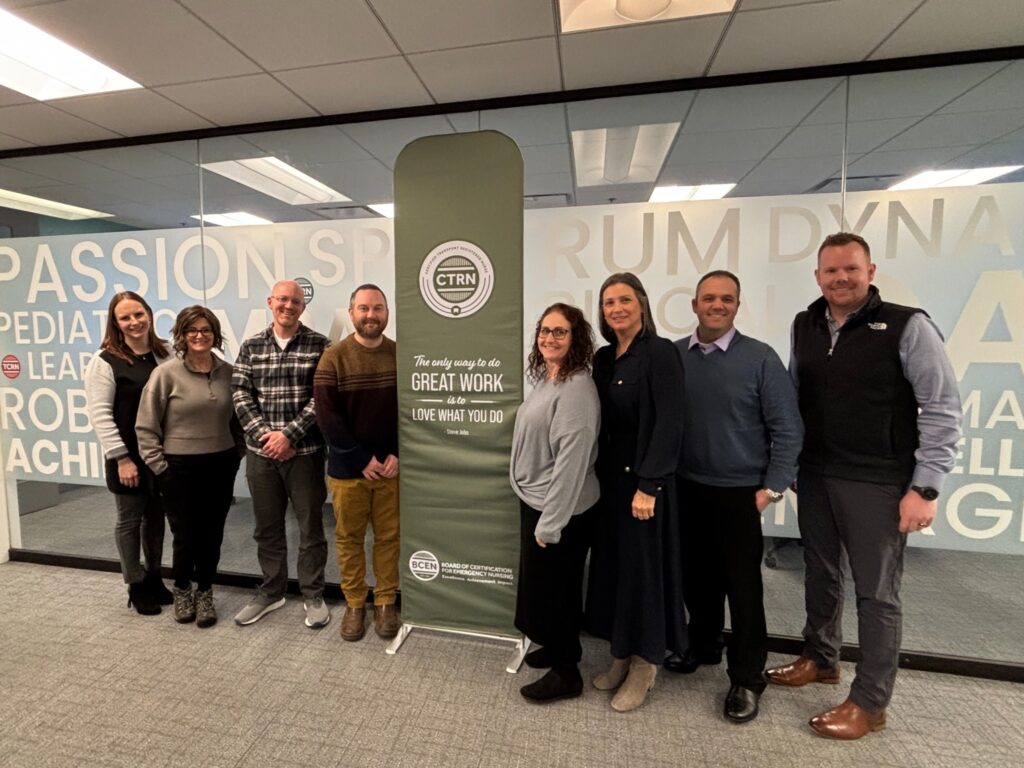
2025 CTRN RDS Advisory Committee
- Jeanette Pascale, McCabe Ambulance (Bayonne, NJ)
- Katherine Mulig, Cleveland Clinic Foundation (Cleveland, OH)
- Jaime Stephens Davenport, AdventHealth Wesley Chapel (Wesley Chapel, FL)
- Danielle Daniel, University of Alabama at Birmingham (UAB) Critical Care Transport (Birmingham, AL)
- Stephen Goux, Golisano Children’s Hospital of Southwest Florida (Fort Meyers, FL)
- Thomas Dunlavey, Westchester Medical Center (Valhalla, NY)
- Nicholas North, UMass Memorial LifeFlight (Worcester, MA)
- Jason Vest, Metro West Ambulance (Hillsboro, OR)
BCEN is also grateful to the Air & Surface Transport Nurses Association (ASTNA) for their support in promoting the RDS survey, which encouraged involvement from the broader ground transport nursing community.
Last but not least, thank you to every nurse who responded to the RDS survey – your participation is essential and tremendously valuable. Thank you for your commitment to the ground transport specialty!
How to Take the CTRN Exam
Ready to achieve the highest-level critical care ground transport nursing credential and get CTRN certified? Learn more about CTRN certification or contact BCEN.